
Dryer Vent Cleaning in Deer Park, TX
Call (713) 949-1413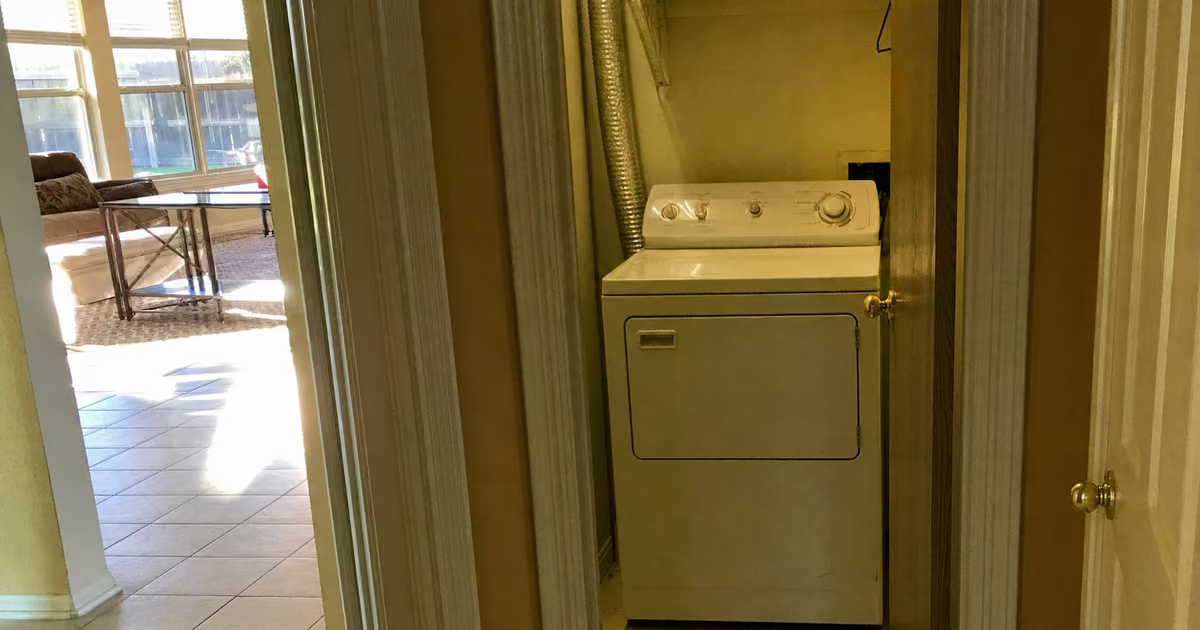
Why Deer Park dryer vents clog faster than they should
Towels come out damp. The cycle runs twice. The utility room feels warm and smells like hot lint. That is a blocked run, not a tired dryer. In Deer Park the blockage usually sits in the attic, not at the wall cap.
Blame the floor plan. These are 1960s–80s one-story brick ranches on grid subdivisions built for plant workers. The standard configuration is an interior utility room with a 10–15 ft lateral through the attic or straight out the back wall. Flat Gulf-coastal ground means no slope to help the air. Long laterals shed lint at every joint and elbow.
Then add the refinery belt. Deer Park sits east of Houston among petrochemical plants, and airborne particulate settles on roofs and intakes. That grit binds with lint into a dense crust. It does not vacuum out like plain fluff. A brush has to break it loose.
The heavy Gulf Coast humidity keeps the deposit damp. Short mild winters still bring cold snaps, and those condense moisture in the attic portion of the run. Damp lint packs tight and can grow mold inside flex duct.
Newer 1990s–2000s homes on the south side fare better, though roof terminations there often hide a crushed elbow above the ceiling.
Same-day service available in Deer Park, TX. Call to check availability.
Call (713) 949-1413Serving Deer Park, TX and Surrounding Areas
Also serving: Pearland, Sugar Land, Pasadena, Spring, Bellaire, South Houston, Channelview, Mission Bend, Deer Park, Cloverleaf, Stafford, Humble, Aldine
Nearby areas we also serve
In addition to Deer Park, we cover Houston, Pearland, Sugar Land, Pasadena, Spring, Bellaire.
Frequently Asked Questions
My dryer vent runs through the attic like most houses on my block — why does that cause problems here?
The attic lateral is the weak point in Deer Park's standard layout. Most of these one-story brick ranches from the 60s through the 80s were built with an interior utility room, so the duct has to travel 10 to 15 feet through the attic before it exits. Warm, wet air from the dryer hits a cold duct during one of our winter cold snaps, condenses, and turns loose lint into a paste that sticks to the wall of the pipe. Add our humidity sitting near 75% most of the year and that buildup doesn't dry out on its own. The straight-out-the-back-wall runs on the newer south-side additions hold up better, but the attic runs are the ones we find packed solid.
Does being this close to the plants actually affect my dryer vent?
Yes, and it's the part most people don't think about. Airborne particulate from the refinery belt settles on roofs and gets drawn into or deposited around exterior vent hoods and intakes. On its own that's just grit, but it binds with lint and makes a denser, grittier deposit than straight lint. It also fouls the flapper on a roof or wall termination so the damper stops closing cleanly, which lets more debris and humid air back into the duct. When we clean here we pay attention to the exterior hood itself, not just the pipe.
What usually fails first on a house like mine?
A few things tend to go first. The transition hose behind the dryer in a tight interior utility room gets crushed when the dryer is pushed back against the wall. The attic section sags between supports and creates a low spot that collects condensed moisture and lint. The exterior termination loses its flapper or gets a screen added at some point, which on a dryer line acts as a lint trap. On the older grid subdivisions we also still find original ductwork that's undersized or has more elbows than it needs, because of where the utility room sits relative to the exterior wall.
What makes one Deer Park job cost more than another?
Length and access, mostly. A short straight shot out the back wall on a south-side home built in the 90s or 2000s is the simplest job we do. A 10 to 15 foot attic run with two or three elbows takes longer, needs work from both ends, and sometimes needs attic entry to reach a sagging or disconnected section. If the exterior hood is damaged or the flapper is gone (common here with the particulate load), replacing it adds to the job. We tell you what we find and what it will take before we start pulling anything apart.
Need dryer vent cleaning in Deer Park?
Call for same-day service. We give you an honest arrival window and the price before we start.
Call (713) 949-1413